
Choosing the best CRM software for higher education is crucial for success. It streamlines operations and enhances student engagement.
Higher education institutions face unique challenges today. From managing student data to ensuring effective communication, the right CRM can make a difference. Universities and colleges need tools that help them stay organized and responsive. CRM software tailored for higher education offers specific features to meet these needs.
It supports admissions, student services, and alumni relations. The goal is to create a seamless experience for students and staff. In this blog, we will explore the best CRM software options. You will learn how these tools can help your institution thrive.
Introduction To Crm In Higher Education
In the dynamic landscape of higher education, Customer Relationship Management (CRM) software is becoming essential. CRM systems help institutions manage interactions with students, faculty, and alumni. They streamline processes and enhance overall communication. This blog post explores the importance of CRM in higher education and how it improves student engagement.
Importance Of Crm
CRMs are vital for higher education institutions. They centralize data and improve communication. With a CRM, schools can track student inquiries and manage admissions. It helps in organizing student information efficiently. CRMs also support marketing efforts by targeting prospective students effectively. A CRM system provides valuable insights and analytics. These help in making data-driven decisions. It leads to better enrollment strategies and improved retention rates.
Overview Of Student Engagement
Engaging students is crucial for their success. CRM software plays a significant role in this area. It personalizes communication based on student preferences. Institutions can send tailored messages and updates. This keeps students informed and engaged. CRMs also help in tracking student progress. They provide alerts for important deadlines and activities. This ensures students stay on track with their academic goals.
Here are some key features of CRMs in student engagement:
- Personalized Communication: Send targeted emails and messages.
- Progress Tracking: Monitor academic performance and milestones.
- Event Management: Organize and promote events effectively.
- Feedback Collection: Gather and analyze student feedback.
In summary, CRM systems are crucial for enhancing student engagement. They enable institutions to provide a personalized experience. This leads to higher satisfaction and better academic outcomes.
Key Features Of Crm Software
CRM software has become essential in higher education. It helps manage student relationships and improves communication. Understanding the key features of CRM software is important for educational institutions.
Student Data Management
CRM software stores and manages student information. This includes personal details, academic records, and contact information. It helps in tracking student progress. Institutions can quickly access and update student data. This ensures records are accurate and up-to-date.
Communication Tools
Effective communication is crucial in higher education. CRM software offers various communication tools. These include email, SMS, and social media integration. Automated messages can be sent to students. This ensures timely communication and reduces manual work.
Analytics And Reporting
CRM software provides robust analytics and reporting features. It helps in analyzing student data. Institutions can generate detailed reports. These reports help in making informed decisions. They also track the effectiveness of communication strategies. This results in better student engagement and retention.
Top Crm Software Options
Higher education institutions need an efficient Customer Relationship Management (CRM) system. These systems help manage student data, communication, and engagement. Below are the top CRM software options for higher education.
Salesforce Education Cloud
Salesforce Education Cloud is a comprehensive CRM solution. It is designed specifically for educational institutions. The platform helps manage the student lifecycle from recruitment to alumni relations.
- Customizable: Tailor the system to meet your institution’s needs.
- Integration: Connect with existing systems like SIS and LMS.
- Analytics: Use data to make informed decisions.
Ellucian Crm
Ellucian CRM is another popular choice for higher education. It offers tools to manage student recruitment, retention, and success.
- Recruitment: Engage with potential students effectively.
- Retention: Monitor student progress and provide support.
- Success: Track alumni and maintain relationships.
Blackbaud Crm
Blackbaud CRM is known for its robust features. It is especially useful for managing alumni relations and fundraising.
- Fundraising: Manage donations and campaigns efficiently.
- Alumni Relations: Keep in touch with former students.
- Data Management: Store and access student information easily.

Credit: www.enrollify.org
Benefits Of Using Crm In Higher Education
In higher education, a Customer Relationship Management (CRM) system offers numerous advantages. These systems help institutions manage interactions with students, parents, alumni, and staff. The benefits range from improved student engagement to enhanced communication and data-driven decisions.
Improved Student Engagement
A CRM system can significantly enhance student engagement. It helps track student progress and identify those who may need extra support. Staff can use this data to provide personalized assistance. This ensures students stay on track.
Additionally, CRM systems can send automated reminders for assignments and events. This keeps students informed and engaged. Engaged students are more likely to succeed.
Enhanced Communication
Effective communication is crucial in education. A CRM system centralizes communication channels. This ensures messages are consistent and timely. Students, parents, and staff receive important updates without delay.
CRMs also support various communication methods. Email, SMS, and social media messages can be sent through one platform. This simplifies the process for administrators and ensures no one misses important information.
Data-driven Decisions
A CRM system collects and analyzes vast amounts of data. This data can be used to make informed decisions. For instance, administrators can identify trends in student performance. They can then adjust programs to address any issues.
Data also helps in resource allocation. Schools can see where funds are most needed. This leads to more efficient use of resources. Ultimately, this can improve the quality of education provided.
| Benefit | Description |
|---|---|
| Improved Student Engagement | Tracks progress, sends reminders, and provides personalized support. |
| Enhanced Communication | Centralizes channels, supports multiple methods, ensures timely updates. |
| Data-Driven Decisions | Analyzes data, informs decisions, improves resource allocation. |
Challenges And Solutions
Choosing the right CRM software for higher education presents several challenges. From data privacy to system integration and user adoption, each aspect requires careful consideration. Here we will discuss these challenges and provide solutions to help institutions make informed decisions.
Data Privacy Concerns
In higher education, data privacy is a significant concern. Students’ personal information must be protected. A robust CRM software should comply with regulations like GDPR and FERPA. Institutions need to ensure that the CRM has strong encryption methods.
Make sure to look for features such as:
- Data encryption
- Two-factor authentication
- Regular security audits
These features help in maintaining the integrity of student data and build trust within the institution.
Integration With Existing Systems
Integrating CRM software with existing systems can be complex. Many institutions have legacy systems that are not easily compatible. It is crucial to choose a CRM that offers seamless integration.
Consider the following:
| Feature | Importance |
|---|---|
| APIs | Allows different systems to communicate |
| Customizable Dashboards | Provides a unified view of data |
| Third-party Integrations | Supports plugins and add-ons |
These features ensure that the CRM can work well with other tools and platforms already in use.
Training And Adoption
User adoption can be a hurdle when implementing new software. Faculty and staff may be resistant to change. Providing adequate training is essential.
Effective strategies include:
- Hands-on training sessions
- Ongoing support and resources
- Feedback mechanisms to address user concerns
Such strategies can help in easing the transition and ensuring that the CRM is used to its full potential.

Credit: element451.com
Case Studies
In the realm of higher education, choosing the best CRM software can be daunting. Understanding how other universities have succeeded with their CRM can guide you. Below, we delve into some University Success Stories and the Lessons Learned from their experiences.
University Success Stories
Many universities have transformed their operations with the right CRM software. These success stories highlight how CRM systems can improve efficiency and student engagement.
| University | CRM Software | Key Achievements |
|---|---|---|
| Stanford University | Salesforce Education Cloud |
|
| Harvard University | HubSpot CRM |
|
| University of Oxford | Zoho CRM |
|
Lessons Learned
From these success stories, several key lessons emerge. These insights can help other institutions in choosing and implementing their CRM systems.
- Tailor the CRM to your needs: Each university has unique needs. It’s crucial to choose a CRM that aligns with your goals.
- Training is essential: Ensure that staff receive proper training. This maximizes the CRM’s effectiveness.
- Focus on integration: The CRM should integrate with existing systems. This ensures seamless operations.
- Continuous evaluation: Regularly assess the CRM’s performance. This helps in making necessary adjustments.
These lessons highlight the importance of a well-planned CRM implementation. By learning from these universities, others can avoid common pitfalls and achieve success.
Choosing The Right Crm
Choosing the right CRM for higher education is vital. It impacts student engagement, administrative efficiency, and overall success. The selection process involves several key factors. Let’s break it down:
Assessing Needs
First, identify your institution’s needs. Different departments may have unique requirements. For instance:
- Admissions: Need tools for managing inquiries and applications.
- Student Services: Require features for tracking student progress and support.
- Alumni Relations: Look for options to maintain and nurture alumni connections.
Conducting a thorough needs assessment helps you understand what your CRM must offer. Engage different stakeholders in the discussion. This ensures all needs are addressed.
Evaluating Features
Next, evaluate the features of different CRM software. Some crucial features to consider include:
- Integration Capabilities: Can it integrate with existing systems like LMS or ERP?
- Customizability: Does it allow customization to fit your specific workflows?
- Communication Tools: Are there built-in email, SMS, and social media tools?
- Analytics: Does it offer robust reporting and analytics features?
- User Interface: Is the interface user-friendly for all staff members?
Make a list of must-have features based on your needs assessment. Use this list to compare different CRMs.
Budget Considerations
Budget is a crucial factor in choosing a CRM. Here’s how to approach it:
| Expense Type | Details |
|---|---|
| Initial Costs | Includes setup fees and initial training costs. |
| Subscription Fees | Monthly or annual costs for using the software. |
| Maintenance | Ongoing costs for updates and support. |
| Hidden Costs | Potential extra charges for additional features or users. |
Compare the total cost of ownership for different CRMs. Opt for one that fits your budget without compromising on essential features.
Future Of Crm In Higher Education
The future of CRM in higher education looks bright. As technology evolves, universities and colleges adopt smarter systems. These systems help manage relationships with students, alumni, and staff. Let’s explore some emerging trends and technological advancements shaping the future of CRM in higher education.
Emerging Trends
Several trends are emerging in the CRM landscape for higher education. These trends aim to improve student engagement and streamline operations.
- Personalized Communication: CRMs now offer personalized messaging based on student data. This helps tailor communications to individual needs.
- AI Integration: Artificial intelligence is used to predict student behavior. AI can suggest courses, offer support, and even flag potential dropouts.
- Mobile Accessibility: More students use smartphones for daily tasks. CRMs are now mobile-friendly, ensuring access from anywhere.
- Data Analytics: Institutions use data analytics to improve recruitment and retention rates. Detailed reports help in making informed decisions.
Technological Advancements
Technological advancements play a crucial role in enhancing CRM systems for higher education. These advancements make CRMs more efficient and user-friendly.
| Advancement | Impact |
|---|---|
| Cloud Computing | Offers scalability and flexibility. Institutions can manage data securely online. |
| Automation | Automates repetitive tasks like sending emails and updating records. Saves time and reduces errors. |
| Integration with LMS | Combines CRM with Learning Management Systems. Provides a holistic view of student performance. |
| Blockchain | Ensures secure and transparent record-keeping. Helps in verifying academic credentials. |
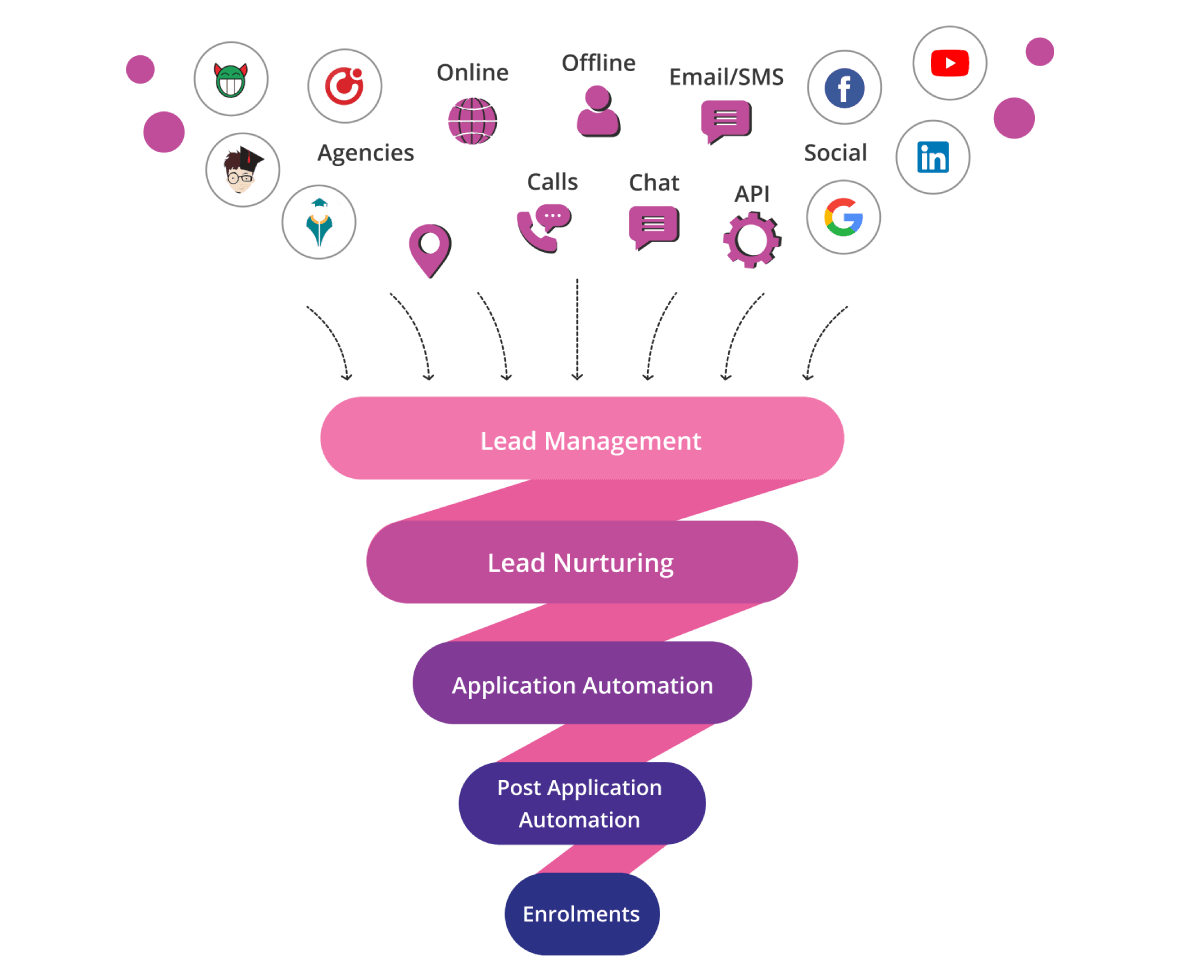
These trends and advancements indicate a promising future for CRM in higher education. Institutions can expect more efficient, personalized, and secure systems that enhance student experiences and operational efficiency.
Credit: www.meritto.com
Frequently Asked Questions
What Is Crm Software For Higher Education?
CRM software for higher education helps institutions manage relationships with students. It streamlines communication, admissions, and alumni relations. This software enhances student engagement and improves administrative efficiency.
Why Use Crm Software In Higher Education?
CRM software improves student engagement and retention. It automates communication and processes, enhancing administrative efficiency. It also provides valuable data insights for better decision-making.
How Does Crm Benefit Student Admissions?
CRM software streamlines the admissions process. It automates communication, tracks application status, and manages prospective student data. This makes the admissions process more efficient and effective.
What Features Should Higher Education Crm Include?
A good higher education CRM should include communication automation, data management, analytics, and integration with existing systems. It should also support mobile access and provide a user-friendly interface.
Conclusion
Choosing the best CRM software for higher education can be challenging. The right solution will enhance communication, streamline processes, and improve student engagement. Consider your institution’s needs and budget carefully. Compare features, user-friendliness, and support options. With the right CRM, your institution can achieve its goals efficiently.
Remember, a good CRM makes a significant difference in managing student relationships. Make an informed choice and see the benefits unfold.
